Why olive oil? / A practical guide
How to taste extra virgin olive oil
Pour a little oil into a small cup, warm and swirl it, smell it, then sip and swallow while noticing fruitiness, bitterness and pepperiness.
Pour enough to coat your mouth. A small opaque cup is useful because colour is not a reliable guide to quality.
Warm the cup gently in your palm and cover the top briefly. Swirl, uncover and smell. Look for fresh impressions that may suggest grass, herbs, tomato leaf, artichoke or ripe fruit.
Take a small sip and draw in a little air. Notice bitterness on the tongue and any clean peppery or prickling sensation in the mouth or throat as you swallow.
Also learn the contrast. Stale or defective oil may seem flat, waxy, musty, fermented or reminiscent of old nuts or crayons. You do not need professional vocabulary to notice that an oil lacks freshness.
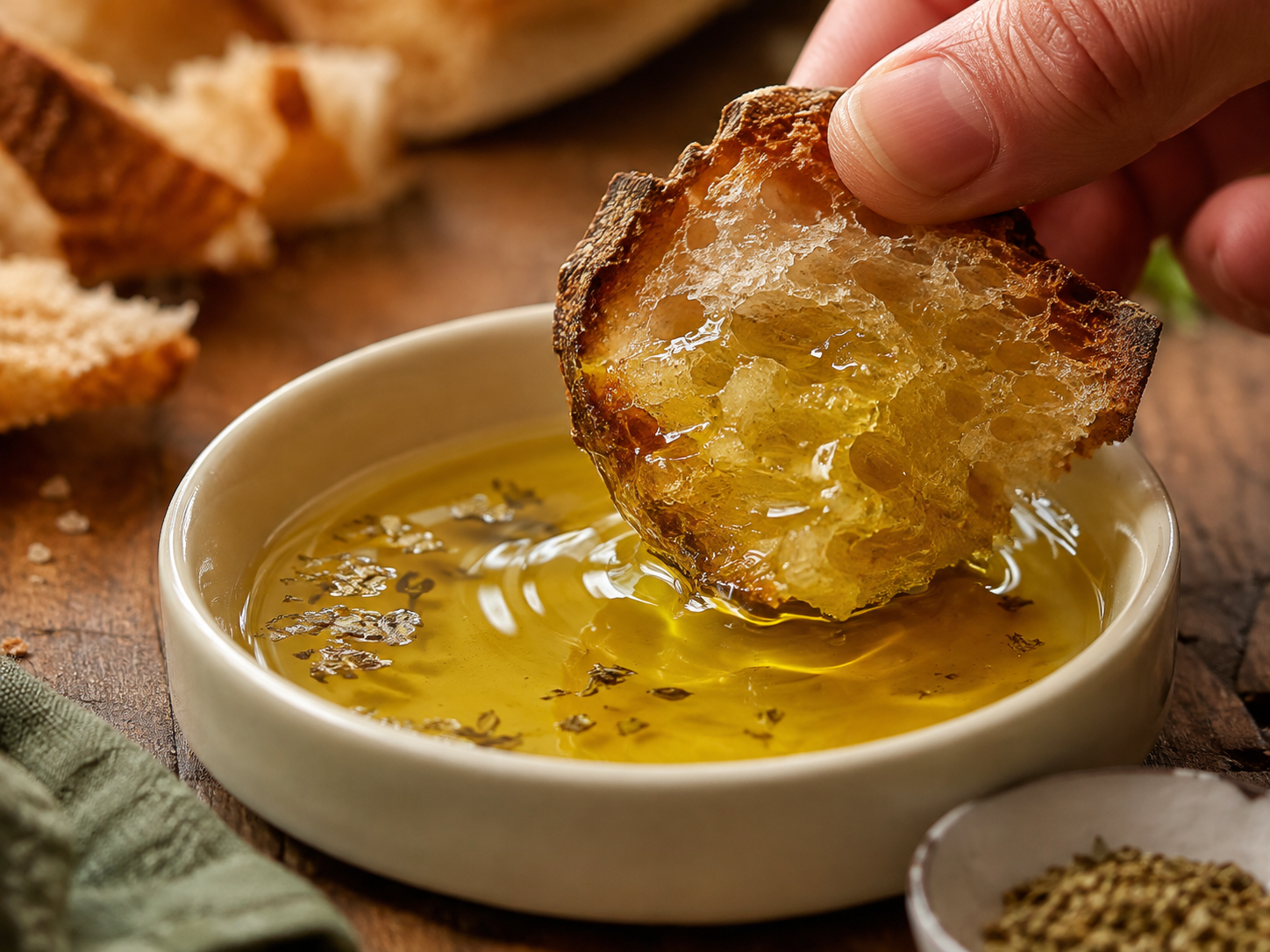
Taste the oil alone first. Bread is excellent afterwards, when the question changes from formal tasting to simple pleasure.
Sources and evidence
Read beyond the claim.
Ingredient uses authoritative guidance and standards, then translates them into ordinary food language. This is general education, not medical advice.
Published 23 August 2026 · Reviewed 29 August 2026Keep exploring