01
You don’t need to be a chef
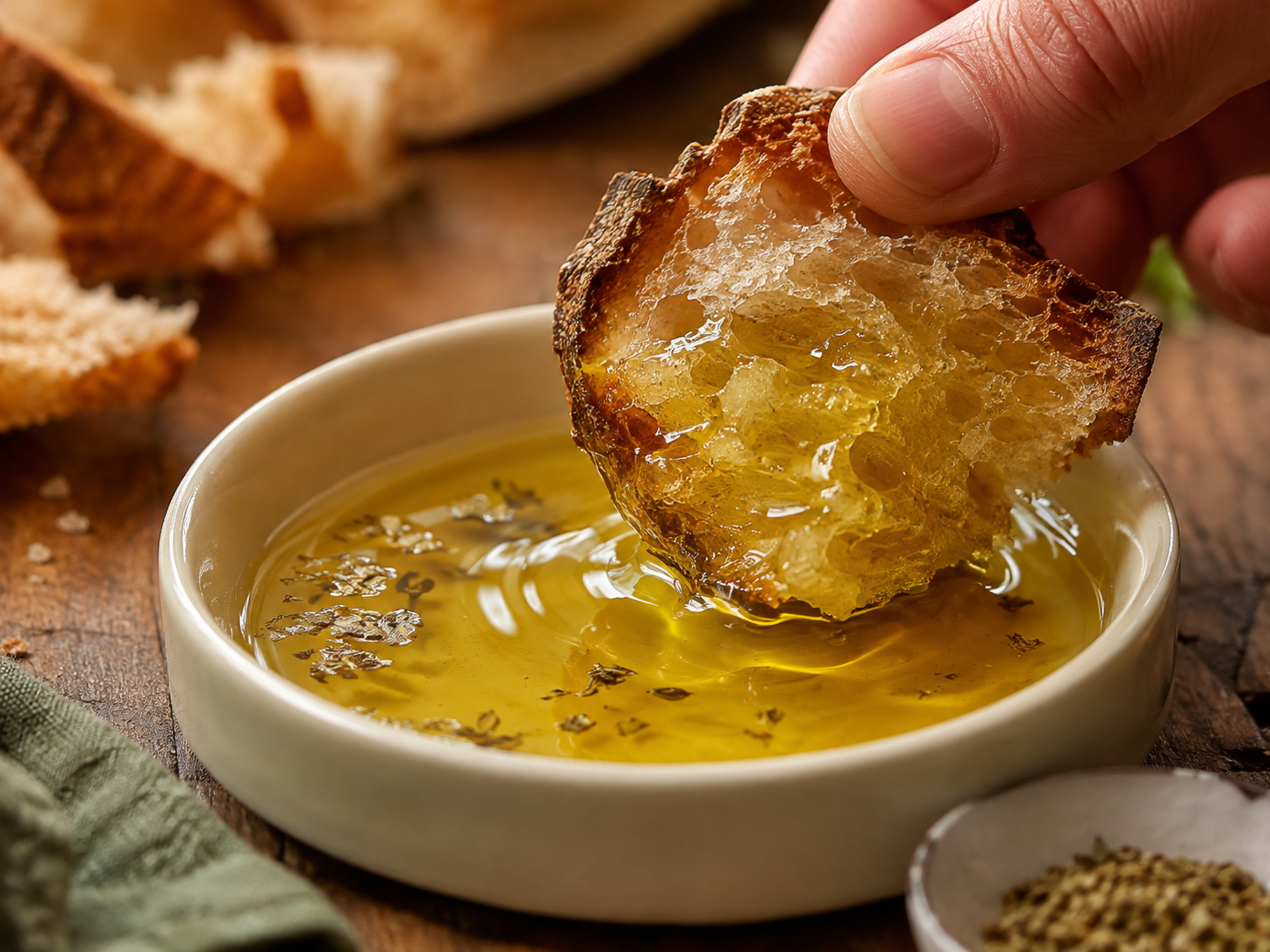
Bread + EVOO
Good bread. Good extra virgin olive oil. Optional sea salt or oregano.
Tear. Pour. Dip.No recipe required.
Bring it to the table →Eat simply. Learn deeply.
Good bread. Good cheese. Fresh tomatoes. Great olive oil.
Discover the simple Greek way of eating and the Mediterranean story behind extra virgin olive oil.
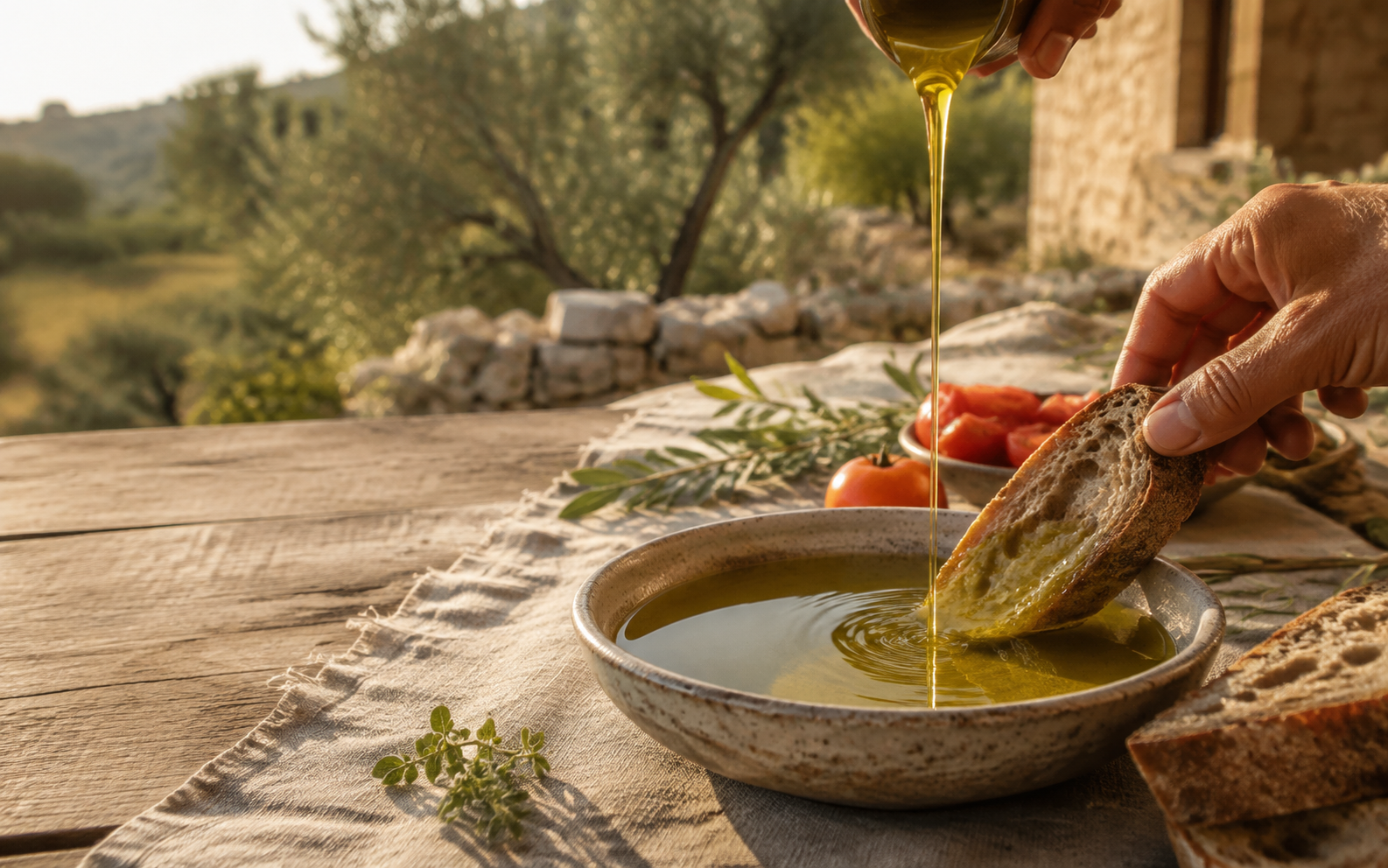
The idea
You don’t need a long recipe or a chef’s pantry. Start with one good thing, finish it generously, and bring it to the table.
01 — Eat
Ideas, combinations and small plates. Two to five ingredients. Always enough olive oil to taste.
You don’t need to be a chef
Good bread. Good extra virgin olive oil. Optional sea salt or oregano.
Tear. Pour. Dip.No recipe required.
Bring it to the table →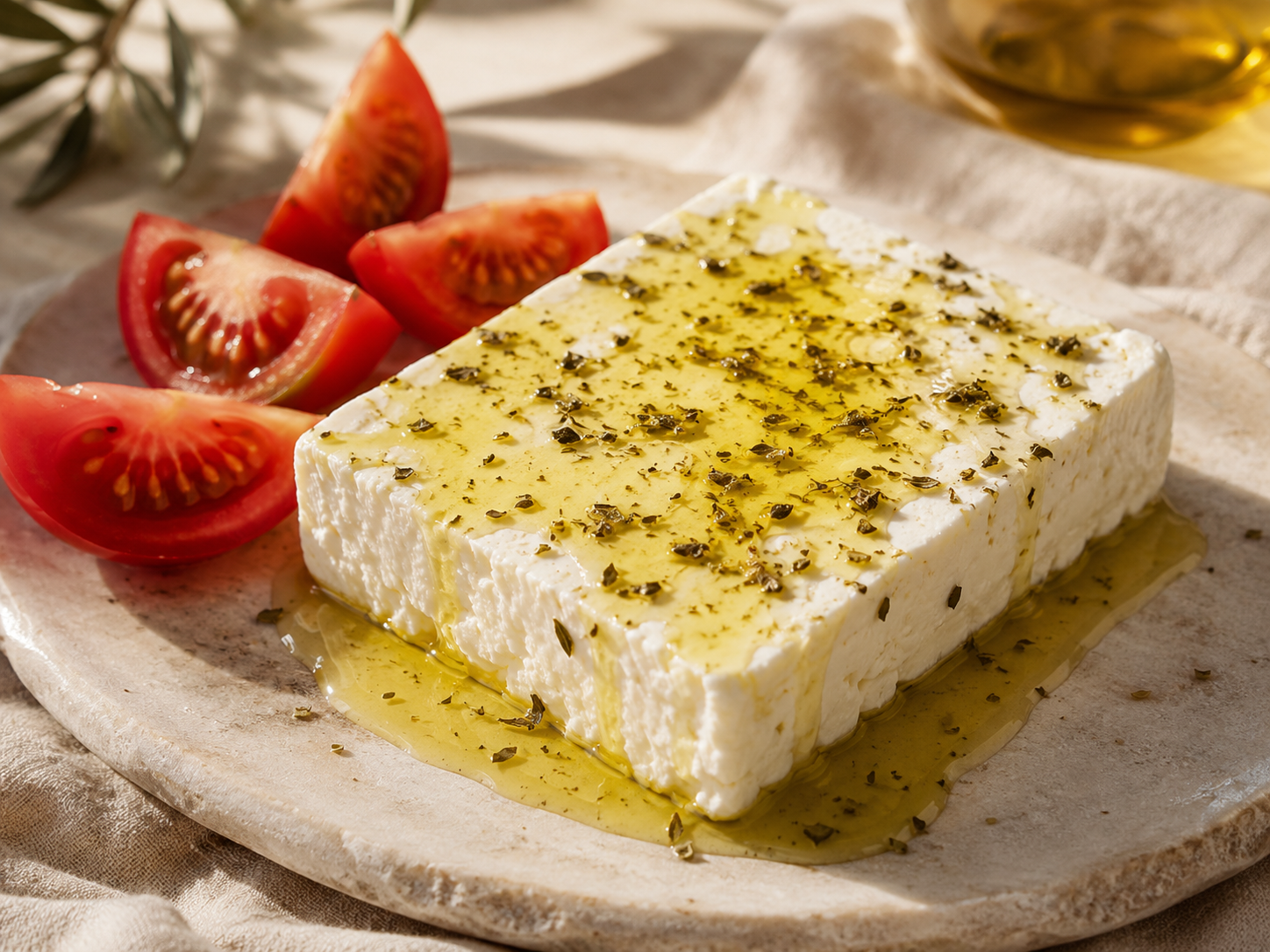
You don’t need to be a chef
Feta. Extra virgin olive oil. Greek oregano.
Done.Creamy, salty and fragrant.
Bring it to the table →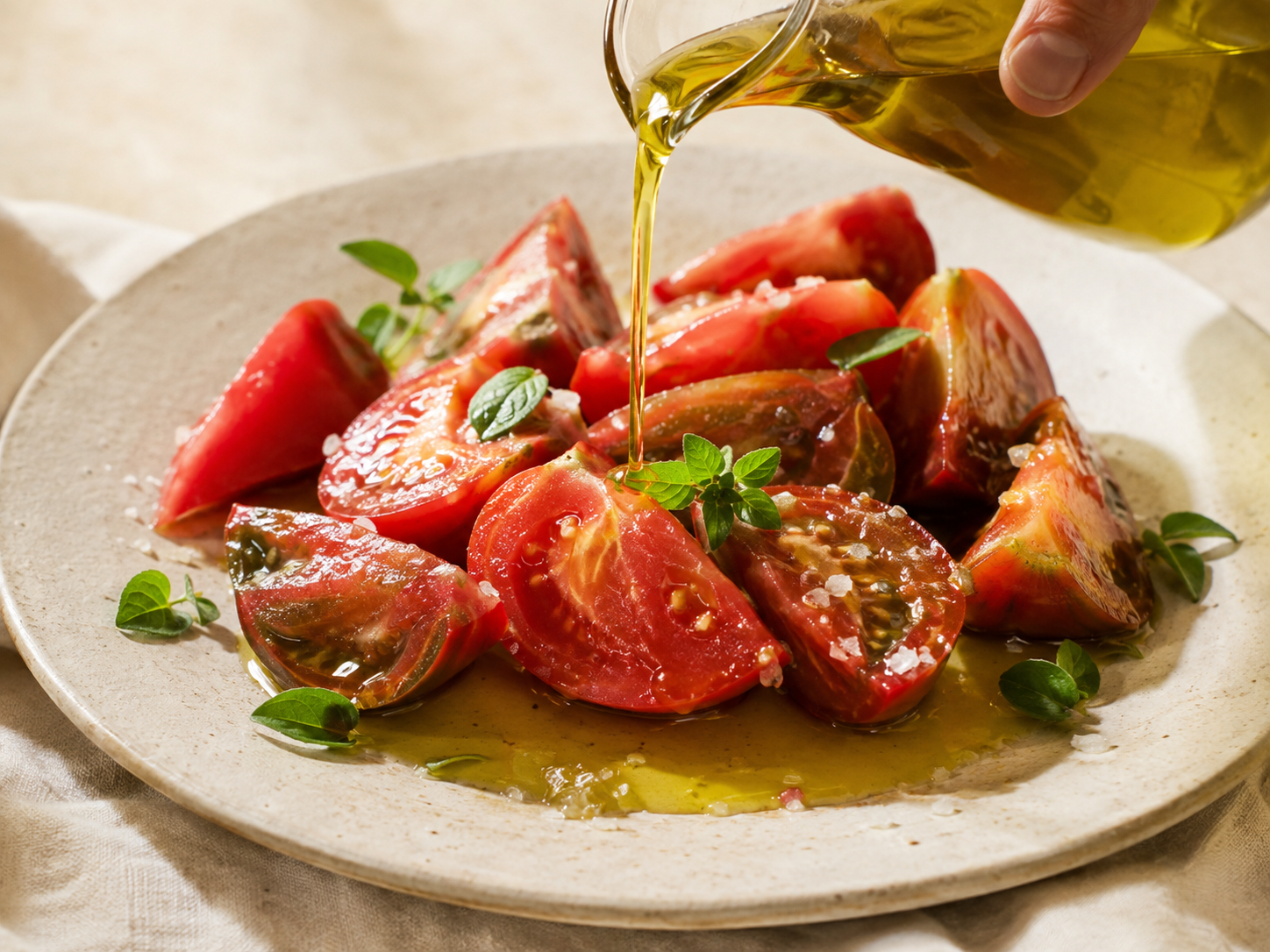
You don’t need to be a chef
Ripe tomatoes. Sea salt. Extra virgin olive oil.
Cut. Salt. Pour.Sometimes the simplest food needs the best ingredients.
Bring it to the table →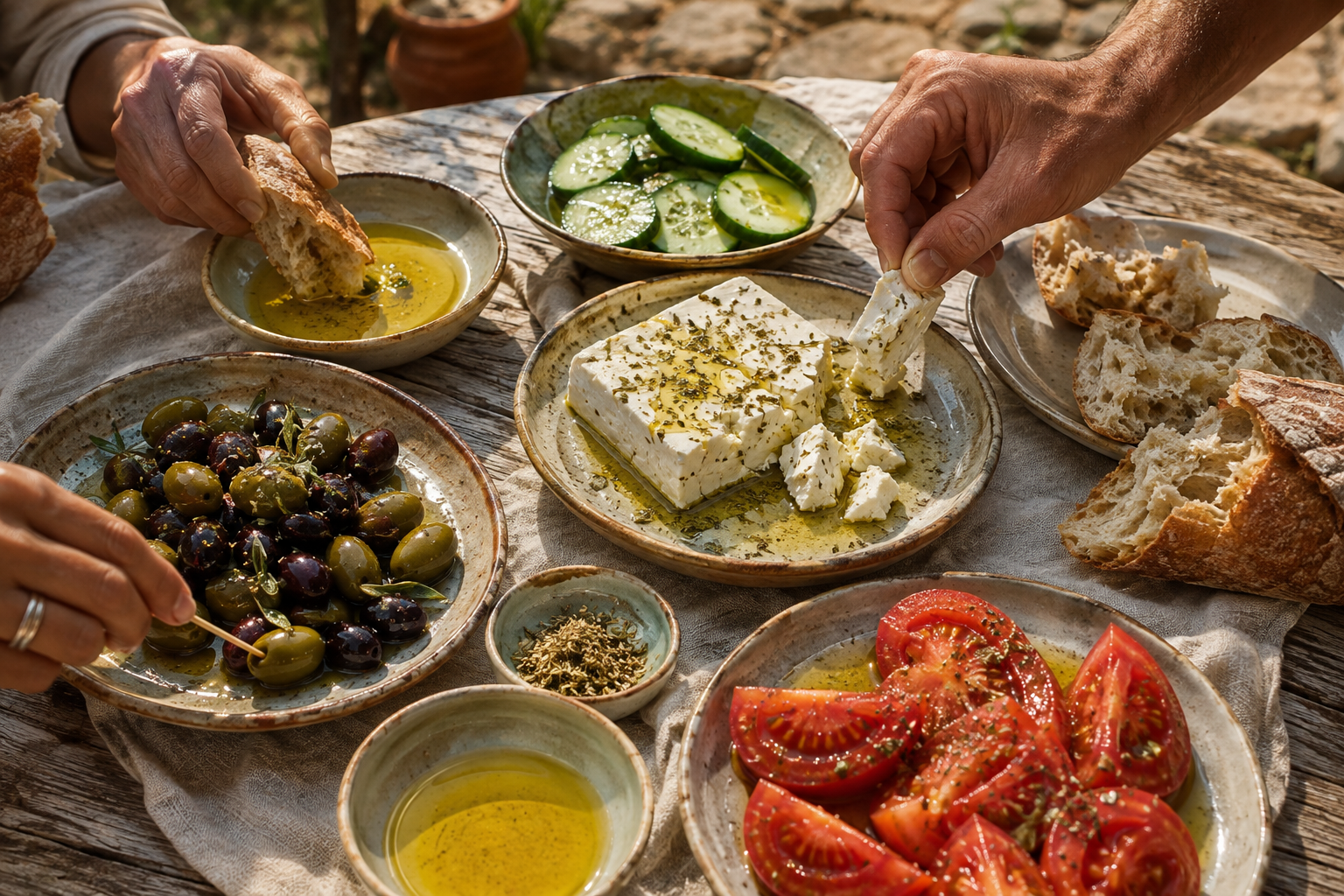
You don’t need to be a chef
Olives. EVOO. Oregano or thyme.
Toss. Leave. Share.A familiar bowl, made brighter.
Bring it to the table →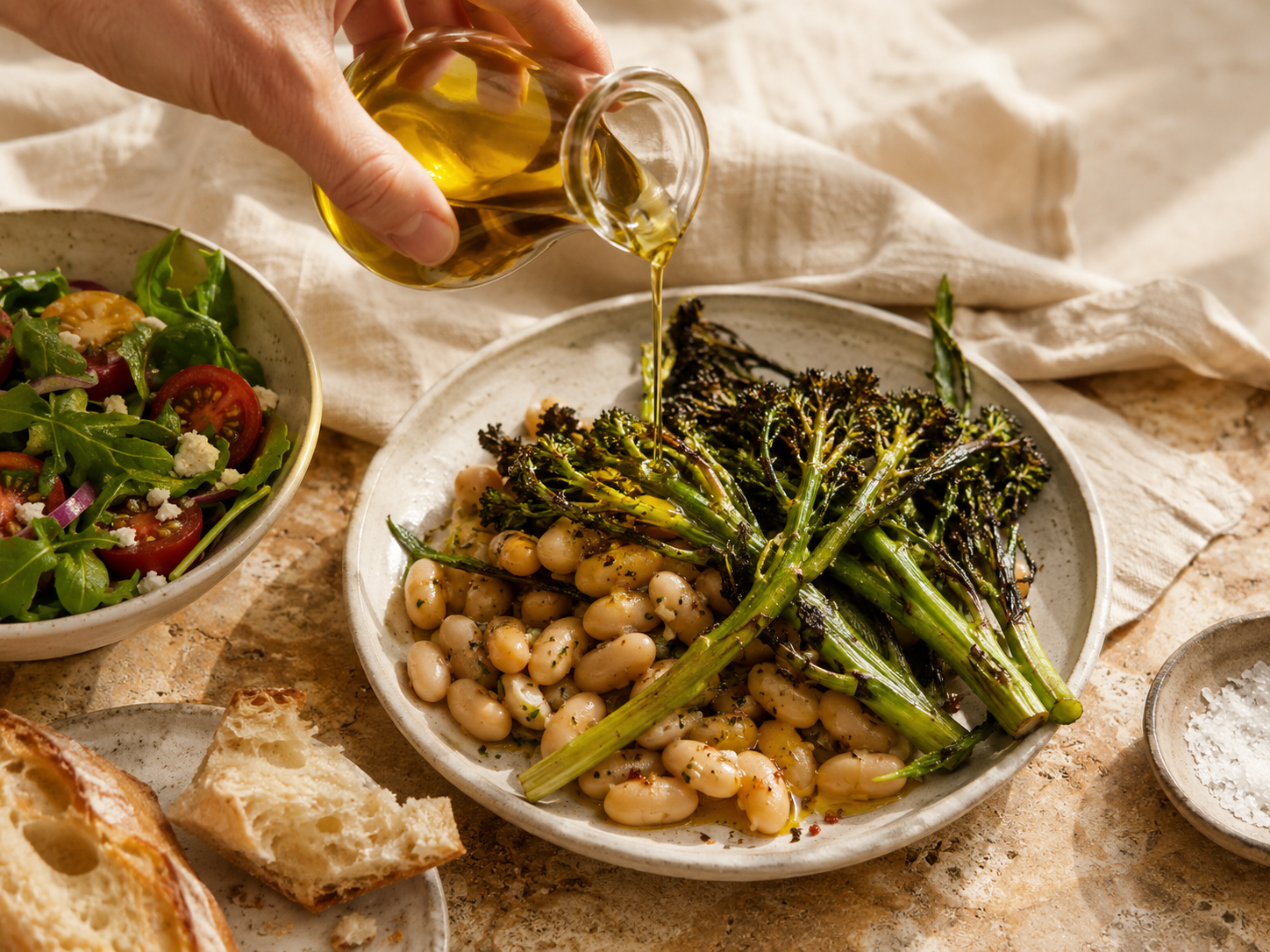
You don’t need to be a chef
Cucumber. Feta. Olive oil. Salt and oregano.
Cool. Crisp. Ready.A small plate in unhurried minutes.
Bring it to the table →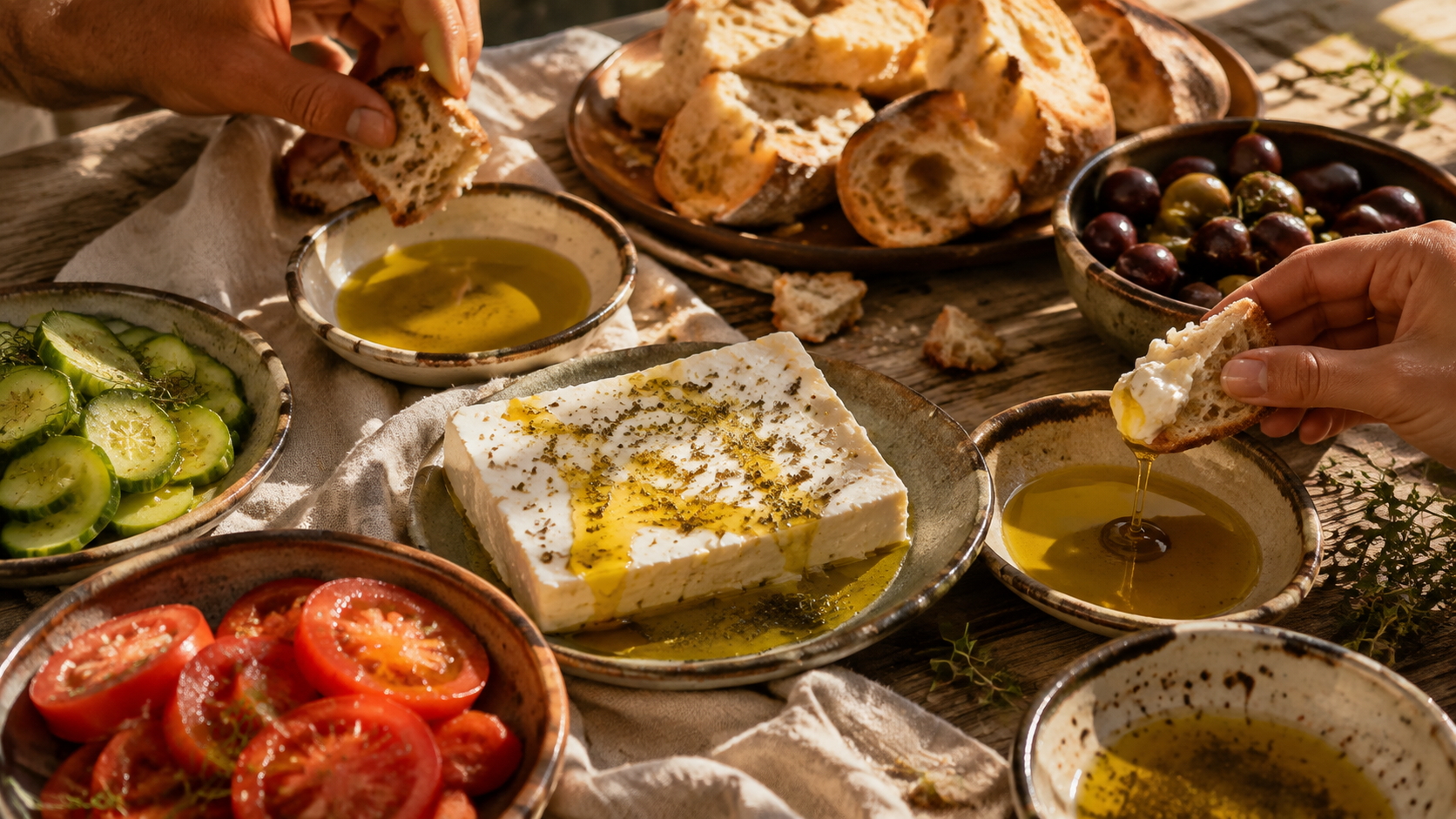
You don’t need to be a chef
Bread. Feta. Tomatoes. Cucumber. Olives. EVOO.
Gather. Pour. Share.Six good things. No cooking performance.
Bring it to the table →Tonight’s table
That’s dinner. Or that’s the beginning of one.
No complicated recipe. No chef required.
A different relationship
It sits at the centre of simple food: bread, tomatoes, feta, vegetables and meze. Something poured, dipped, tasted and shared—not only something used before the plate reaches the table.
02 — Learn / Why Olive Oil?
Extra virgin olive oil has been part of Mediterranean eating for generations.
Today, it is also one of the most studied components of the Mediterranean dietary pattern. The interesting story is credible, practical and bigger than any miracle claim.
Olive oil is rich in monounsaturated fat, particularly oleic acid. It can form part of a balanced diet when used in place of fats higher in saturated fat.
Learn about olive oil and fats →Extra virgin olive oil contains plant compounds called polyphenols. They contribute to flavour and help protect the oil itself from oxidation.
What are polyphenols? →Olive oil belongs alongside vegetables, legumes, fruit, grains, fish and other whole foods. The health story is an overall way of eating, not a medicine.
Explore the Mediterranean connection →Health meets the Greek table
You don’t need a complicated diet. You don’t need complicated recipes. Making good olive oil part of everyday food can be remarkably simple.
Start with the Greek Table →Flavour first
Using extra virgin olive oil uncooked or as a finishing oil allows its aroma, fruitiness, bitterness and pepperiness to stay prominent.
This is about experiencing flavour—not a suggestion that olive oil becomes unhealthy when cooked.
Read the practical guide →A Mediterranean rhythm
Olive oil doesn’t need an occasion. Use it. Pour it. Dip into it. Finish food with it. Share it.
Tomatoes on toast, finished with a green pour.
LunchDress leaves, beans or grains simply.
DinnerFinish vegetables at the table.
MezeShare bread, feta and olives.
Make good olive oil part of the table rather than something that sits forgotten in the cupboard. This is a lifestyle idea, not a prescribed dose.
Discover simple ways to use it →The Learn Library
Short answers first. Plain-language context after. Built for curiosity, not exaggerated claims.
Extra virgin olive oil is virgin olive oil produced by mechanical or physical means and meeting defined chemical and sensory standards, without refining.
Olive oil is a characteristic fat source within a broader Mediterranean pattern built around vegetables, fruit, legumes, whole grains, nuts, fish and shared meals.
Olive oil is rich in monounsaturated fat, particularly oleic acid, and can form part of balanced eating when it replaces fats higher in saturated fat.
Polyphenols are naturally occurring plant compounds in extra virgin olive oil that contribute to flavour and help protect the oil itself from oxidation.
Using EVOO uncooked or as a finishing oil keeps its aroma, fruitiness, bitterness and pepperiness especially easy to notice.
Yes. Extra virgin olive oil can be used for sautéing, roasting, baking and other everyday cooking, as well as dressings and finishing.
Koroneiki is a Greek olive cultivar widely used for olive-oil production and known for oils that can be aromatic, green, bitter and peppery.
A clean peppery or prickling sensation, often felt toward the back of the throat, is called pungency and can be a positive characteristic of extra virgin olive oil.
Protect olive oil from light, heat and air: keep it tightly closed in a cool, dark place and use it while it still tastes fresh.
Pour a little oil into a small cup, warm and swirl it, smell it, then sip and swallow while noticing fruitiness, bitterness and pepperiness.
Extra virgin olive oil is unrefined virgin olive oil meeting the highest grade standards; bottles labelled simply ‘olive oil’ are commonly blends of refined olive oil and virgin olive oil.
Free acidity is a laboratory measurement of free fatty acids in olive oil; it is not the sharp or sour taste you experience in your mouth.
Why Ingredient?
Ingredient is a South African guide to the simple Greek table. We explore how extra virgin olive oil is poured, dipped, tasted and shared, and explain what makes a good bottle worth understanding.
Explore the guides →